
In my last post, I talked about the insanities of the research funding process, ranging from the astronomical time sink in preparing grant proposals, to the arbitrary nature of the selection process that favors safe ideas that generate results in the short run.
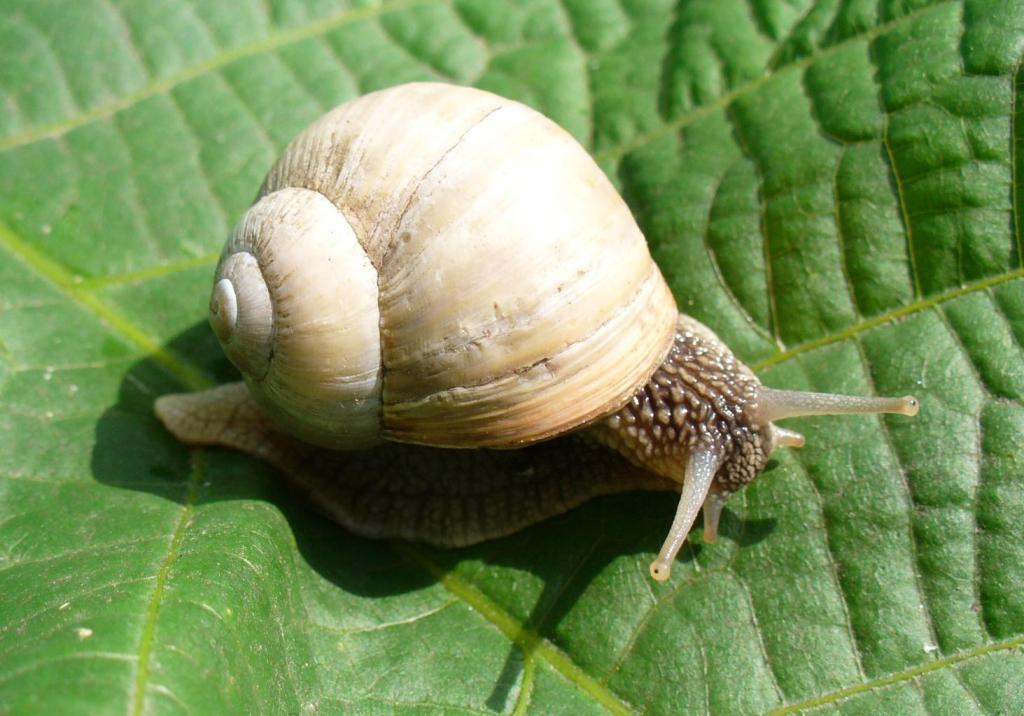
To continue that train of thought, one of the main features of a feasible grant proposal is to convince the committee that your project will yield a positive research return-on-investment (ROI) within the timespan of the funding period (typically 2-3 years at the postdoctoral level). Anyone familiar with the academic journey will realize that most of the time, 2-3 years is not a lot of time. And I believe that to be especially true for a science like ecology, where everything (organisms, animals, permits and field campaigns) moves at a snail’s pace.
The slow pace of field ecology
Reflecting upon the nature of my discipline relative to the other sciences, I realized ecology sits in a unique position in terms of academic pace. Because ecologists often work on living organisms (plants, bacteria, animals etc.), the work necessarily entails regular observations over a span of time, ranging from minutes (if you are an environmental microbiologist) to months and years (if you are monitoring plant/animal growth and community assemblage). This post largely addresses the case for field ecologists working on higher taxa.
Consider, for example, ecology’s sister field – biology. Many biologists work on living organisms as well, but a huge chunk of modern biological research relies on bioinformatics, genetic sequencing, or incubating unicellular (e.g. bacteria) and model organisms. Most, if not all of these activities can be done in the relative comfort of a lab at any time of the year. Furthermore, organisms incubated in the lab often have fast turnover times spanning days to months at worst, so results can be churned out relatively quickly. This is not meant to dismiss the primary time sinks in biological research (e.g. protocol optimizations, completing paperwork to adhere to bioethical standards and data analyses), but these are things that can be rushed out any time, so long as the resources to do so are available.
Not so for field ecology. Expeditions to remote field sites (especially the tropics) often require permits that take an extraordinary amount of time for approval (especially in less developed tropical countries where things don’t work nearly as efficiently). Fieldwork might be conducted in challenging terrain and setting up experimental plots is time-consuming. Observing biological phenomena on higher taxa (e.g. plant growth rates in response to nutrient addition) requires months to years before a discernible effect can be seen (if there even is one). Finally, in areas where seasonality is a thing to consider, if you miss the field season – too bad; try again next year! The nature of the major time sinks in ecological fieldwork is clearly different from other fields, but they are just some things that cannot be rushed out, even with all the money and resources in the world. Having an extra 100k is not going to make the plants respond faster – even though that’ll be nice to have!
What about other fields in STEM? Fields that deal with ancient observations (e.g. Paleobiology) may end up publishing faster simply because fossil records are static in nature – the primary time sink is in sample collection and processing in the lab. Chemists are free to design and run experiments all year round, allowing them to produce results faster than many fields. From what I heard, many computationally-oriented fields such as physicists and AI also publish relatively quickly; the same is likely true for theoretical ecologists. While I can’t speak on behalf of other fields, it is safe to say experimental fields generally produce results far slower than theoretical or computational fields. And within these experimental fields, field ecology is probably one of the slowest of all, rivalling biomedical research (clinical trials has its own struggles) and experimental physics (high standard for evidence).
As a personal anecdote, I worked in a lab whose primary specialization is in agricultural microbiology and molecular biology, even though my project had nothing to do with either field (it was a complicated funding decision). All the other researchers in that lab would regularly provide updates on the 4 to 5 papers they were working on simultaneously. Meanwhile, my own project required hours of fieldwork and progress was incremental, slow and cumbersome. I hardly had time to think about 2 papers – never mind 4 to 5!
And herein lies the problem: the slow pace of many branches of ecology is often incompatible with the fast pace of scientific ROI expected from many postdoctoral fellowships. This makes it difficult for scientists to push for projects that demand consistent long-term observations to make meaningful ecological inferences, favoring other, often easier avenues to generate publications such as meta-analyses, systematic reviews and modelling studies.
The need to do good, slow science
In my opinion, there is a huge disjunction between the pace of ecology as a field-oriented discipline and the time span common to most grants and postdoctoral fellowships. Within one’s PhD program, one is focused on graduating on time and establishing a name for oneself – hence there is an incentive to settle for less risky and time-intensive projects. As one enters the postdoctoral phase, the temporary nature of postdoc positions means that funding durations are often short, restricting one from pursuing longer-term studies despite possessing the expertise. Even assistant professors may be hesitant to commit to long-term studies that might bear no fruit (i.e. significant results), for fear of jeopardizing their tenure evaluation. In other words, only researchers with tenure or full-time research scientist positions can realistically pursue long-term ecological studies. That leaves only a handful of accomplished researchers around the world free to pursue projects without the pressure to produce short-term results.
Ecologists are increasingly aware of the need for long-term ecological monitoring studies to reveal biological phenomena that extends past several months/years typical of most grant proposals. Often, what is observed in the short run may not persist in the long run. For example, in a free-air carbon enrichment experiment (FACE) that spanned over a decade, Norby et al. (2010) reported temperate forests increased annual net primary productivity in the first six years of the study under elevated CO2 but that effect diminished after over a decade. Similarly, data analysis of the results from a 40-year long ecological monitoring network showed that plant populations require over a decade to stabilize, highlighting the need to maintain long-term observational networks to study sustained ecological phenomena. Yet, long-term ecological monitoring studies remain few and far between. In fact, the trend of academic publishing rates suggests ecologists are publishing more frequently, rather than taking time to accumulate sufficient observations over time to yield solid findings. No one is willing to wait anymore to report their findings – not researchers, not funding bodies and certainly not the media.
We can’t slow down, or can we?
The growing haste and impatience of the scientific enterprise isn’t a newly-recorded phenomena, and there has been a trending movement in the past decade advocating the need for science to slow down. These movements call for academics to:
- Aim for quality, not quantity
- Engage in slow, thoughtful and careful work to maintain reproducibility and public trust
- Reject the need to produce quick answers to difficult questions
- Reflect on the purpose, or broader picture of publishing one’s research
As much as I agree with such a need, for now I cannot imagine how these recommendations can be feasibly implemented. For one, junior scientists who publish “slower” might end up unfairly assessed as “unproductive” by hiring and grant committees, weeding them out of the system altogether. Our media landscape encourages fast, snappy answers to difficult questions, pressuring experts (or sometimes, “experts”) to give oversimplified (or underqualified) statements to issues that warrants further investigation (the COVID-19 pandemic is a good example of this). Even some universities are complicit in this – in China, postgraduate students are required to publish at least one (and usually around two) papers to graduate.
Science is not alone in needing to slow down. Society, as a whole, is frantically running ever more quickly. And if academics turn a blind eye to this, one day we will hit a wall – hard. Right now, the signs are on the wall that we are approaching said wall. Academics are burning out, journals are swamped with subpar submissions, and millions of man hours lost to failed grant applications.
I don’t know if we’ll ever find a remedy to counter the prevalence of fast science, often at the expense of quality. For me, I think the solution must be found outside science; personally, the practice of Sabbath comes to mind. In the Judeo-Christian tradition, Sabbath is a day of forced rest and worship, aligning with the creation account that God created all things in six days but rested in, and blessed the seventh day.
But the seventh day is a Sabbath to the Lord your God; you shall not do any work—you, your son or your daughter, your male or female slave, your livestock, or the alien resident in your towns. For in six days the Lord made heaven and earth, the sea, and all that is in them, but rested the seventh day; therefore the Lord blessed the Sabbath day and consecrated it. (Exodus 20:10-11 NRSVUE)
Perhaps in an unexpected twist, religion – of all things – can teach academics what they need to break free of this vicious cycle of academic pace: to pause, rest and reflect.




 Forests vs faith
Leave a comment