
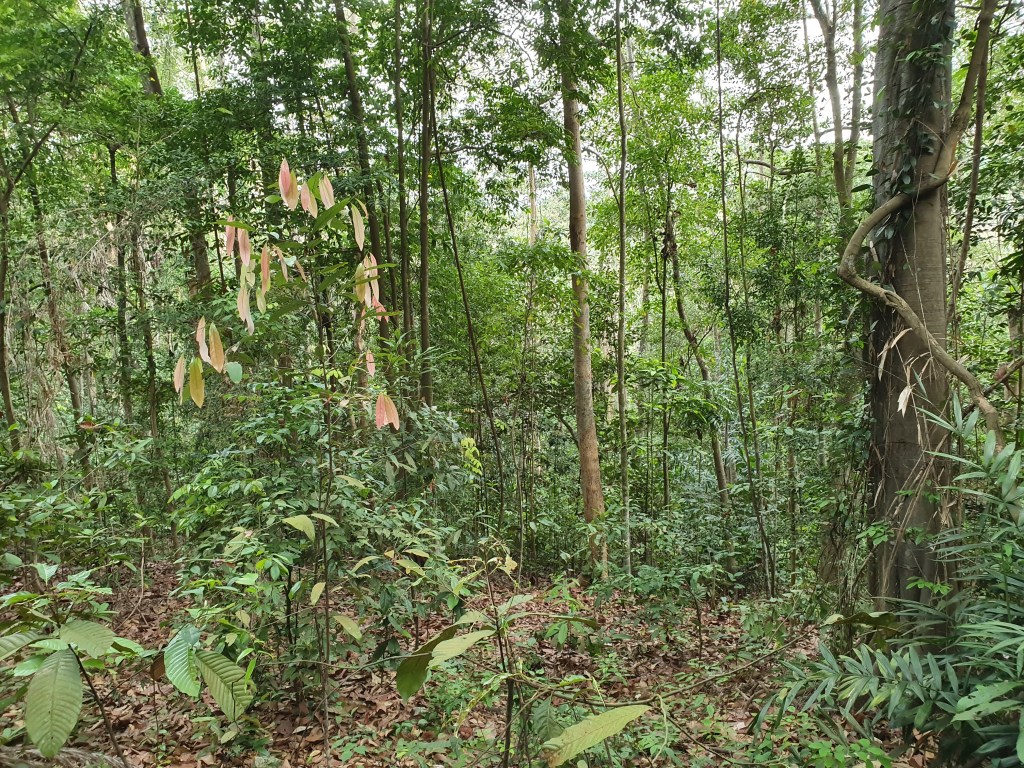
Right now, I am at the final stages of my Ph.D. preparing for my defence. At the same time, I’ve been trying to get my thesis work published in international, reputable journals.
One curious problem that I never thought when I first embarked on my work in tropical forests was just how hard was it to get my work published. The problem wasn’t that I had nothing to show from my research, nor my results were not significant, nor the reviewers found my work uninteresting and insulted my entire bloodline; it was just how hard it was to get to the peer review stage for my work to be vetted by other experts.
The pains of tropical ecology research
Tropical ecologists already have their work cut out for them. For one, most tropical countries aren’t nearly as well-funded as their temperate counterparts and thus have much less resources to work with. Getting to remote field sites is another stepping stone and the need for permits from less-than-efficient governments only make life harder. There’s plenty of things in the tropics ready to kill you (or at the least, make you itch REALLY badly). Experimental design in species-dense environments is another challenge altogether – which species do you sample (and why!), how do neighbouring species impact your results, how to account for differences in community composition, etc.
The list goes on. But I’m not talking about any of these in this post. If there is any topic of interest to any readers out there, let me know in the comments!
Assume you overcame everything and are now ready to share your results to the world (without a botfly in you!). Where do you send your manuscript to? Should you try for the big guns (i.e. Nature, Science, PNAS)? Unless you have something clearly special, you’ll probably settle for a middle-to-high impact journal on your first attempt; preferably a coveted Q1 journal.
Should you try for a general journal? Or should you try to publish in somewhere focused on tropical research? There ain’t that many choices for the latter (as far as I know, only Biotropica explicitly specialises in tropical ecology research that is in the Q1 ranks), so you may try to publish in a journal that specialises in a particular taxon (e.g. plants), theme (e.g. biodiversity) or a general ecology journal (e.g. Ecology).
This was the journey I took over the past year. I tried multiple journals but I made it to the peer review stage only exactly once (rejected eventually), even though I was fairly confident my work was rigorous enough to stand up to scrutiny. The general ecology journals that I applied to rejected me not out of poor quality or lack of interest, but for a poor “fit”. My work was too specific to an ecosystem and not generalisable enough to present broad ecological concepts for a general ecology journal. Instead, I tried to reframe my work to show how my results for the tropical forest I worked in can be implemented into vegetation models used for other tropical ecosystems. Alas, the reviewers who eventually led to my only full rejection kept insisting I “tone down” my findings, declaring that my findings were limited to the ecosystem I worked at and ungeneralisable elsewhere.
A subtle bias in publishing tropical ecological research?
I don’t know if this is a problem unique to my case. But this subtle bias just dawned on me as I kept looking on for a new home for my manuscript. As tropical ecologists, we work in vastly unique systems with unique biodiversity, climate and soils. Even within the tropics, there exists substantial heterogeneity in soils, species composition and biomes. As an example for the latter, Colombia houses glaciers, mangroves, deserts and tropical forests all within its borders. Just imagine how much endemism is packed in there!
But this uniqueness is both a blessing and a curse for research. It is a blessing because there is just so much to study and learn about tropical ecosystems that we have yet to even name. But it is also a curse when we try to showcase our work to the world and encounter conservative reviewers reluctant to generalise. In theory, they might be correct; we don’t exactly know to what extent we can take the findings from a tropical rainforest in the Amazon and apply them onto one in Africa or Southeast Asia.
I am not trying to say only the tropics experience this problem. I’m sure temperate zones are heterogenous in their own ways (e.g. seasonality is a bigger issue) and generalising results from a Canadian beech forest to a Swedish spruce forest probably warrants some caution too. But in which scenario will you be more confident to generalise your results? The latter with a couple dozens of species? Or the former with hundreds to thousands of tree species between them?*
I don’t think the journals’ directions were in any way unfair here. They have every right to decide what kind of studies they wanted to accept and what kinds of research to consolidate and showcase. If there is anything to becry about, be mad about how outrageously profitable these journals are, or how expensive publishing has gotten, or how much research journals gatekeep for sheer profit. Nonetheless, I do think that there is some truth to this subtle bias that plagues tropical ecologists. At the end of the day, we want to see our work in reputable journals with as high an impact factor as possible. But at the same time, we need to remain honest with our results to decide how bold to be with our claims. Can these two goals be met simultaneously? For the time being, I see no better way but to keep trying and writing better.
Interestingly, while researching for this post, I came across a new breakthrough study that showed that tropical forests from the Americas, Africa and Asia may be more similar than expected. Perhaps this will encourage tropical scientists to be a bit bolder in their claims to enhance the generalizations of their findings? Or maybe I just need to get better at storytelling…




 Forests vs faith
Leave a comment