
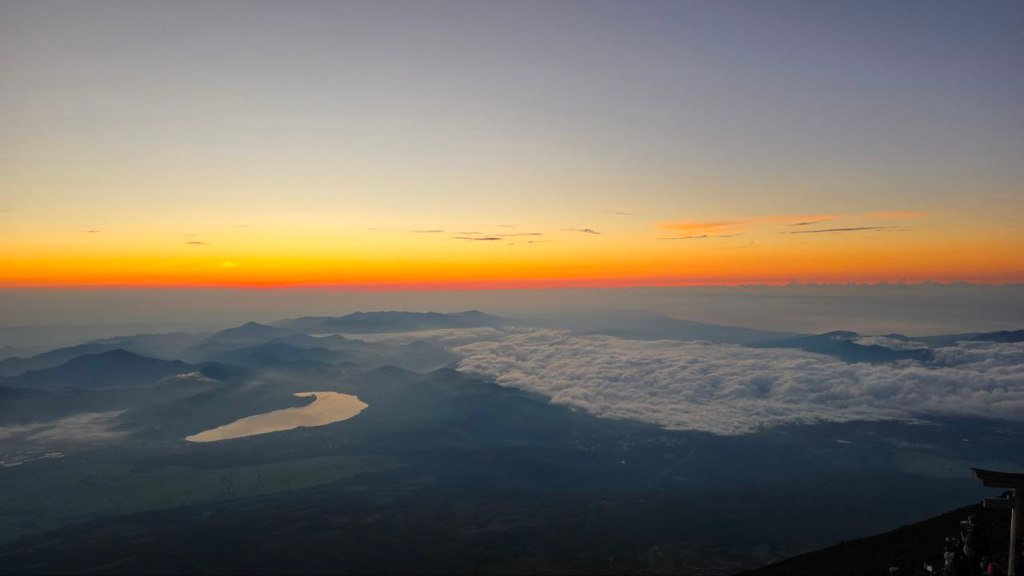
Happy holidays!
As the year draws to a close, here’s hoping all believers and readers many blessings and God’s peace this season.
As I write the final post for this track for this year, here I am reflecting on my favorite posts that I’ve written in each track (there will be a similar blog post on the ecology track too!). As of today, I’ve written 20 posts in the theology track (21 if you include this review post!). While there have been weeks when I’ve been too busy/sick/occupied to commit to a post, for the most part I am fairly satisfied with these posts, both in quantity and in quality. Having a blog to pen down my thoughts on topics that I found interesting has been intellectually fruitful and rewarding and I hope to continue this habit of blogging in 2026, although probably with slightly lower frequency.
All-time favorite blog post
The blog post that I am most proud of this year on this track is my discussion whether faith naturally drives good works. To me, this is a sufficiently important topic that I never see any believer discussing, possibly because everyone thinks how could it not? Yet, when one really considers the diversity of behaviors of Christians worldwide, there is little evidence to believe so. Furthermore, what I really liked about the post was the application of psychological frameworks to drive at the fundamental mechanisms that underscore believers’ deeds. This post became increasingly important as I considered other topics of faith later throughout the year. Once the assumption that faith naturally drives good works breaks down, other doctrines could be called into question, such as whether Jesus taught salvation via faith alone.
A runner-up to this title would go to my first ever blog post in the theology track on biblical inerrancy (or the lack thereof). I felt that this post was suitably accompanied by its counterpart on actual academic fraud in the ecology track, given that a major insight that changed my view on Scripture was the presence of forgeries in the bible. Reading Dr. Fredriksen’s book later in the year (see below) further highlighted how fluid Scripture and its interpretations were in the early church. I would argue that letting go of biblical inerrancy is the single biggest move a believer can do to draw closer towards early Christian thought, which includes the teachings of the historical Jesus.
Favorite blog post on Christian living
A number of posts covered topics related to the everyday lives of Christians now and back then. This group included posts that discussed the meaningfulness of work, justice, devotions and ideal Christian behaviors. My favorite two posts among these goes to the book review I did on early Christianities by Dr. Paula Fredriksen. Reading this book gave me a glimpse into the world of a believer in ancient Rome where doctrines were debated and people were exposed to new philosophies and worldviews. In my opinion, every Christian who thinks of Scripture as “divinely inspired” should consider picking this book up someday to be familiar with the major theological and doctrinal developments in the early church. Far from what most pastors and churches will dare admit, believers were rarely united in thoughts and deeds back then.
Favorite blog post on church doctrines
Several blog posts in the theology track were covering church doctrines related to soteriology, eschatology and interpretation of Scripture. The one that I am most proud of is my first post (out of two) on rethinking sola fide. Here, I argued that the doctrine that salvation is by faith alone is virtually incompatible with the sayings of Jesus as portrayed in the Synoptics, especially those that called believers to love one’s neighbor by actively caring for them through works. One cannot love one’s neighbors through faith alone. And as I argued in my favorite post above, faith doesn’t necessarily drive good works either.
The sequel to this post was a deep dive into the common counterarguments against salvation via faith AND works, ultimately concluding that no one will truly know whether they’re saved until they reach the pearly gates. I was also very pleased with this post as well.
Favorite post that blends both ecology and theology together
A big motivation for crafting two separate tracks in this blog is to show how my experiences in my day job (as an ecologist) complemented or conflicted with my thoughts about God and Scripture (as a believer). In my opinion, the post that best highlights the crossroads between ecology and theology is the discussion on Creation Care, along with its counterpart in the ecology track.
Even till today, Christians are rarely concerned about environmental issues (relative to non-believing, well-educated populations). I personally find this theology to be one that is extremely underappreciated, yet so relevant in today’s era where the natural world groans in pain. In that spirit, I also volunteered in a Creation Care ministry in 2025 – one of my personal highlights this year.
Least favorite post
While I tried my best to produce a blog post once a week (taking turns between ecology and theology), there have been weeks where the inspiration did not truly hit, and I had limited thoughts to put to the pen. I wasn’t particularly fond of my recent blog post on whether prayer works. Part of it was due to my frustration with 2025 with a ton of disappointments and unanswered prayers in my life, and I had to vent somewhere to get stuff off my chest. Looking back, there was ample room to clarify my definitions on “prayer” and “works” to make my post more coherent and cohesive. I still maintain, however that people should simply be honest that prayer doesn’t “work” for whatever reasons, rather than trying to make excuses for God.
Closing thoughts
2025 has been my first year of blogging, and I am proud of myself for sticking it through. I hope to be able to carry on this habit of writing and letting my thoughts roam on paper (it’s a great alternative to doomscrolling btw), though I anticipate that I’ll commit to a biweekly post instead, taking turns between the two tracks.
Happy new year everyone and God bless!





Leave a Reply