
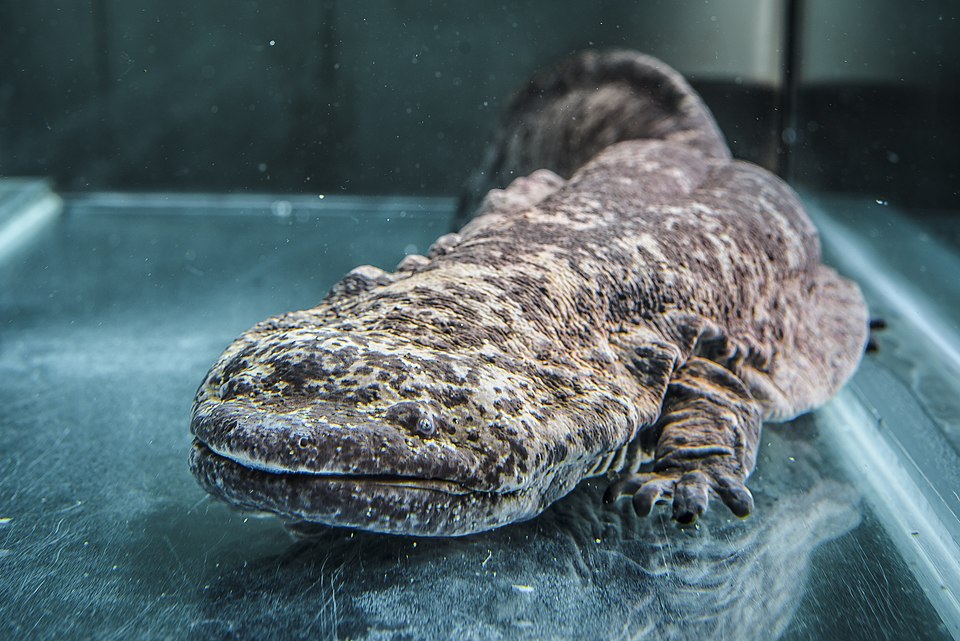
This isn’t intended to be a generic post about how our world’s biodiversity is in decline, or that species are important to maintain ecosystem functioning. This post contains something more somber.
The world’s biodiversity is indeed in decline, further hastened by money-loving, egoistic political leaders who couldn’t care less about the natural world. Conservationists are at the frontline of the battle against this decline, dedicating entire careers and livelihoods to see that our favorite species are saved from extinction. Yet, it is a sad reality that money and resources are never enough in the conservation world, no matter how hard these folks work.
In these times, how does the future of conservation look like? Honestly, not great. In fact, so dire is the situation that scientists have started asking some really tough questions, such as “which species to save?”. It is becoming increasingly improbable to expect we can save all species on earth with the reality of conservation funding, habitat degradation and climate change, and experts are now pressured to make tough choices as to which species to save and which to let go.
I don’t know about you, but the doom-and-gloom motive behind such a judgement call strikes me as fairly ruthless, methodological and cold-hearted to me, even though I recognize the practicality in making such a call. As a believer, I see the intrinsic value in all life in Creation and every species is testament to the handiwork and ingenuity of our Almighty God who has blessed us with such diverse wildlife on Earth.
And God said, “Let the earth bring forth living creatures of every kind: cattle and creeping things and wild animals of the earth of every kind.” And it was so. God made the wild animals of the earth of every kind and the cattle of every kind and everything that creeps upon the ground of every kind. And God saw that it was good. (Genesis 1:24-25 NRSVUE)
Yet, the ecologist side of me is torn by the need for practicality and the acknowledgement that hopeful prayers will not magically cure the problem of the biodiversity crisis. Species are currently going extinct at alarming rates, and the drivers of said extinction such as habitat degradation and exploitation and climate change are not going anywhere either. Which species deserves the most protection then?
That depends on who you ask. Before that, why do we conserve species in the first place?
Reason 1: Intrinsic/aesthetic/cultural values
We like them. Simple as that.
This is probably the most common argument for conserving biodiversity, and it is easy to see why – people do like pandas, polar bears, sharks, kiwis and other colorful, cute, charismatic species. It is not surprising that funding for research and conservation will be greater for these species given their larger public fanbase.
While I have nothing against scientists and people wanting to research and protect their favorite organisms, whether said research should come at the cost of other more ecologically valuable species becomes a grey area. Every time someone asks “why should we save the <insert charismatic animal>?”, the typical answer is a really generic ecosystem function, such as “species xxx is part of the food chain”, “species yyy helps disperse seeds with their droppings”, “species zzz is interconnected with the rest of the ecosystem and removing it will lead to an environmental cascade”. Yet, somewhere in me I often wonder “don’t other species also perform similar functions?” Why conserve this species specifically? It is one thing to say that we should save the turtles. It is another to say we need to save <insert specific turtle species> and dedicate substantial amounts of resources to studying that one species.
These questions become even more murky when we involve uncharismatic species. Are they not valuable if no one likes them? How many people actually know what that species at the top of this post is? And whether it has a unique role in its native ecosystem? Leave a comment if you do!
Reason 2: Flagship species for conservation in general
Maybe conserving the pandas by itself is not going to significantly change anything. But perhaps by drawing public attention towards these cute, giant oreo-coloured bears, people and donors become more inclined to contribute towards conserving pandas and their native ecosystems (bamboo forests), which do contain a rich assortment of other species.
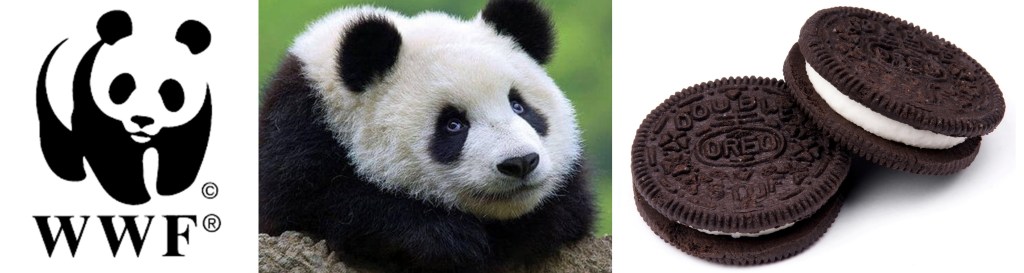
Absolutely no difference at all.
Here, pandas are known as a flagship species – a species that possesses uniquely charismatic attributes that are used as the centerpiece of conservation campaigns for other species. The motivation behind flagship species is similar to trickle-down economics – by encouraging people to protect the pandas, they donate to conserve bamboo forests which houses them. It is no surprise that the WWF’s logo is a panda, capturing this idea of representing flagship species to attract attention to conservation. In a similar idea, by encouraging people to save the turtles, they reduce plastic consumption to reduce plastic pollution entering the sea.
Personally, I am not sold on capitalizing on flagship species to drive conservation campaigns, as are many others. For one, the jury is still out whether funds towards flagship species conservation actually do trickle down into the protection of ecosystems. Secondly, the focus on charismatic flagship species may warp public perception on biodiversity, thinking that some species are more “important” or “worthy” of conserving over other less charismatic, but possibly functionally important species. Finally, I foresee that an overemphasis on species conservation may take away attention from the loss of ecosystem functioning and the services they provide, which should be the ultimate goal of the field of conservation itself – to conserve ecosystems and their inhabitants as a whole.
Reason 3: Ecological role of certain species
A stronger, more scientific argument can be made for focusing on species that are known to exhibit unique ecological roles. For example, hawksbill turtles uniquely feed on toxic sponges that compete with coral reefs (they are the only turtle species that primarily feed on sponges), thus maintaining the health of reefs. Similarly, vultures uniquely prey on carrion, elephants act as ecosystem engineers and apex predators keep prey populations in check (within their local ecosystems). I don’t think any ecologists will argue against researching and preserving these critical ecological players, who carry entire ecosystems on their backs.
What about species that don’t fall under this category? There are plenty of rare species that, by virtue of their low population sizes, don’t seem to exhibit unique roles that maintain ecosystems. There do, however, seem to be plenty of concern for these species, such as the giant tortoises in the Galapagos, this beautiful bird from the heart of Bolivia, this prized dipterocarp native to Singapore, this globally endangered spinetail devil ray and many others. I think all of these species are cool and I would like them to be protected if resources weren’t limited. But if a donor were to ask me why I should protect these specific species (not just any tortoise, macaw, tree or ray), I struggle to think of an honest answer beyond “they’re cool but rare”.
So, who gets to live or die?
When I first took my first junior conservation/applied ecology class, somewhere at the back of my mind, I remember the wise words of the professor that taught me (sorry I forgot his name!) – conservation biology is a rigorous empirical science, but conservation is about people’s values.
Those words stuck with me ever since, and it shaped my thinking whenever I read a news article on conservation and biodiversity loss.
As a society faced with a biodiversity crisis, we will need to reflect on why we choose to save some species (over others) and whether those choices make sense for the well-being of society as a whole. While this may spell doom for some of our favorite colorful critters, it could spell hope for important keystone species that has yet to receive enough attention. Such decisions can only be made by refining the way we communicate the ecological importance of the species we love and preserve, instead of posing general ecological roles that can be filled by a broad range of taxa. It would be a great step forward if we could see this feature implemented in global databases such as the IUCN Red List, perhaps with a new field explaining why this species is ecologically (and uniquely!) important in its known geographical distribution, reinforcing the need to protect said species.
There is an implicit assumption here that species conservation is an approximate zero-sum game – the protection of one species necessarily implies relinquishing the protection of another. Perhaps someone can give an argument to dispute this mindset. For now, I don’t see how this isn’t true under our current systems where 1) biodiversity is declining at an alarming rate; and 2) conservation is forever strapped on resources (and may even be more so, given certain recent world events).
Conserving ecosystems as opposed to species
I personally think a better approach to conservation should be to think beyond “which species are worth saving” in favor of conserving ecosystems instead; or as the cliché goes: “Look at the forest instead of the trees”. We will probably never be able to resolve most species in time before they become extinct in the wild, unnoticed by us. Most of us will never care about the loss of these unknown species. Most people have barely shed a tear for these recently extinct species. But we would certainly care when we lose our mangroves which protect coastal communities from tsunamis, coral reefs that house the fish we eat and forests which feed indigenous populations. In each of these cases, the benefits brought about by ecosystems and biodiversity are obvious and perceivable. Prioritizing the protection of ecosystems in these cases means extending that protection to all its inhabitants and reaping the ecosystem services of said protection – a win-win for both biodiversity and humanity.
I see ecosystem conservation as a far more holistic approach to the preservation of biodiversity. By taking conservation to an ecosystem level, we emphasize the protection of not only individual charismatic species but also less well-known (or undescribed) species that may be functionally important and the interactions between both groups. By emphasizing the protection of ecosystems and landscapes, we bring in the human aspect of conservation and realize the needs of indigenous groups who still rely on the land to survive. This way, support for conservation can continue, knowing that it will benefit both nature and humanity together. Right now, I suspect nature-lovers are still far more likely than most to contribute to conservation, but that leads to many others who don’t see the need to donate to species conservation. Instead, by shifting the conversation towards meeting anthropocentric needs of indigenous communities through ecosystem conservation instead, others (e.g. Christians and other religious groups) may be inclined to open their wallets, providing much needed resources to spur conservation efforts worldwide.





 Forests vs faith
Leave a comment