
In my last post on the theology track, I opened the month with a tribute to the Season of Creation 2025. Part of the post covered, albeit very briefly, the eschatological outlook of Christians within the framework of Creation Care.
Within the faith, the study of the “end times” is known as eschatology, covering a multitude of questions that humanity has always wondered since time immemorial: What will happen to us and the earth in the end times? When will it happen? What signs will accompany it? None of these questions are original to the Christian faith; we can see even within the bible how different authors across history have arrived at different answers to these questions.
How many times have Christians predicted the end? Here’s a list. I’m no math whizz, but the hit rate of these predictions seems a little…low. Yet, this has not stopped believers from “reading the signs”, interpreting the increased frequency in earthquakes (which isn’t even true), recent conflicts and even climate change as signs that the end draws near. The latter group is what inspired me to write about eschatology for this post, since it ties closely to believers’ inclinations to live in more environmentally responsible ways; aka caring for Creation.
My post today seeks to cover the diversity in these answers, and why I think any attempts to arrive at a model answer to eschatology is at best futile, at worst speculative, meaningless and perhaps even counterproductive to the Christian walk.
A blast from the past: What Jews thought would happen in the end?
For a very long time, the Jewish scriptures were silent on whether there even was an end in the first place. In small pockets of the OT such as in the book of Ecclesiastes, we have small glimpses of what early authors thought happened after life – nothing was left for the dead. Nothing particularly mysterious or insightful.
Whatever your hand finds to do, do with your might, for there is no work or thought or knowledge or wisdom in Sheol, to which you are going. (Ecclesiastes 9:10 NRSVUE)
This continued into the Davidic era and beyond, as portrayed in several psalms (e.g. Ps 6:5) and writings from prophets (e.g. Isaiah 38:18). However, the tone of scripture gradually shifted as the Davidic kingdom eventually collapsed and scattered to their neighboring nations. In response, there were portrayals of messiahship – an anointed figure of great standing to restore the land of Israel and bring her people back from the surrounding nations. When the time is set, God promises to deliver His people someone who will usher in a new era – Israel will crush all her enemies, their lands recolonized, the temple restored, and the nation rejuvenated. This expectation is left to hang through the last books of the OT prophets, persisting till today.
Early Christian thoughts on the end times
Enter the apocalyptic era. While the word “apocalypse” may give connotations of doomsday and destruction, the Greek root word means “revelation” (hence the other name for Revelations, which is the Apocalypse of John). Broadly, this genre of text alludes to the unveiling of the future state of the world, often through dreams, prophecies and visions.
This is a step above the initial expectations of a future messiah in Judaism, who is expected to restore the glory of the nation of Israel. We can see glimpses of this upgraded apocalyptic expectations in some of the latest texts in the OT (e.g. Daniel) and the Synoptics, where a great figure called the “Son of Man” will come from the clouds and usher in cosmic judgement.
As I watched in the night visions, I saw one like a human being coming with the clouds of heaven. And he came to the Ancient One and was presented before him. To him was given dominion and glory and kingship, that all peoples, nations, and languages should serve him. His dominion is an everlasting dominion that shall not pass away, and his kingship is one that shall never be destroyed. (Daniel 7:13-14 NRSVUE)
“Then they will see ‘the Son of Man coming in clouds’ with great power and glory. Then he will send out the angels and gather the elect from the four winds, from the ends of the earth to the ends of heaven. (Mark 13:26-27 NRSVUE)
Establishing the identity of this figure is a challenging task, requiring extensive knowledge of Greek, Hebrew and an understanding of apocalyptic expectations in a Greco-Roman period. Scholars remain divided on whether Jesus saw Himself as this great figure, but this question is not essential for the purposes of this post. More important here is what happens during this process? Common themes in the gospels include great suffering, spectacular supernatural phenomenon (Mark 13 and Luke 21) and grand judgement (Matthew 25:31-46). Those who endures all of these are “saved” (Matthew 24:13).
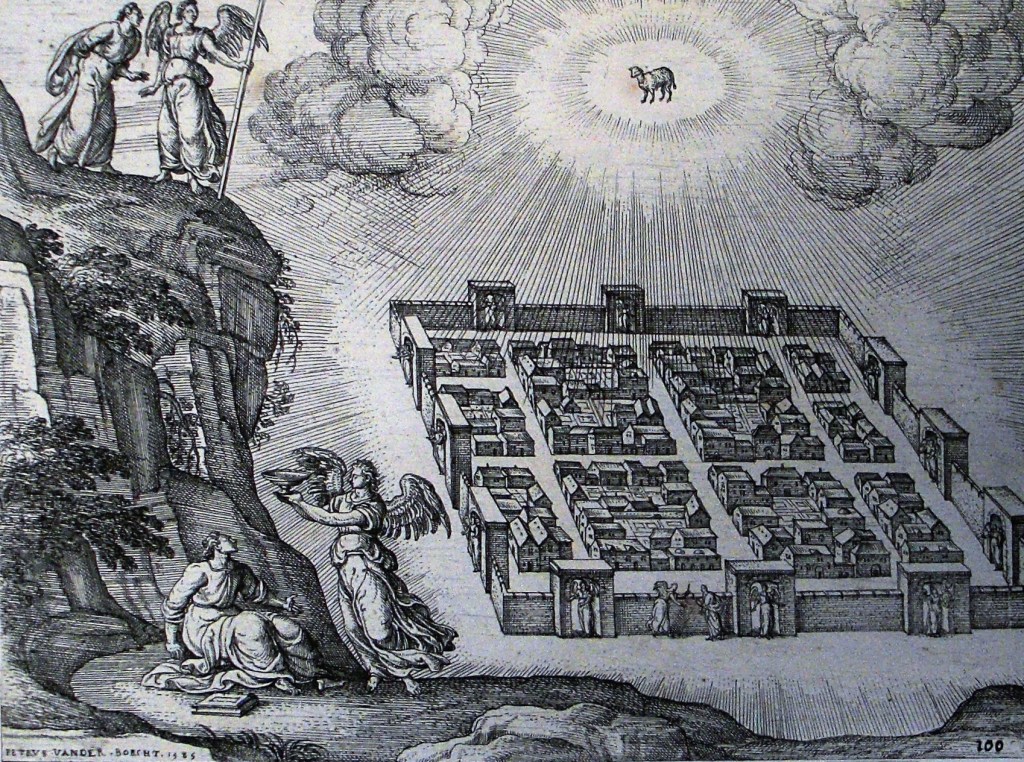
What happens to the “saved”? One possible interpretation is that believers are swooped up to heaven, most prominently based on portrayals of the end by Paul (see 1 Thess 4:16-17). This is probably the most popular understanding of Christians today, that those who have turned to Christ are now saved and will be escorted to heaven after the mortal realm. Yet, if one explores the entire bible thoroughly, we can see other end-states being portrayed such as the creation of a new heaven and a new earth (Isaiah 65:17), a renewal of heaven and earth (e.g. Rev 21; Matthew 19:28), the freedom of Creation from decay (Romans 8:18-23), ultimate and complete annihilation of all things (e.g. 2 Peter 3), etc. Even within these verses cited, theologians and scholars have found numerous ways to interpret these verses. For example, within Creation Care theology, the flames in 2 Peter 3 are understood to be more like a purifying fire that cleanses rather than eradicates.
For I am about to create new heavens and a new earth; the former things shall not be remembered or come to mind. (Isaiah 65:17 NRSVUE)
And the one who was seated on the throne said, “See, I am making all things new.” (Revelations 21:5 NRSVUE)
For the creation waits with eager longing for the revealing of the children of God, for the creation was subjected to futility, not of its own will, but by the will of the one who subjected it, in hope that the creation itself will be set free from its enslavement to decay and will obtain the freedom of the glory of the children of God. (Romans 8:19-21 NRSVUE)
But the day of the Lord will come like a thief, and then the heavens will pass away with a loud noise, and the elements will be destroyed with fire, and the earth and everything that is done on it will be disclosed. (2 Peter 3:10 NRSVUE)
I don’t think there is one single clear answer to this question. It is more likely that these biblical authors originating from different time periods and locations were simply giving their own views as to what the end might look like, without consideration for presenting a unified, clear answer for the modern reader. I would also add that despite the name of the book of Revelations, it is not universally understood to be a book about the future and the end of time.
Modern views: The rapture and a temporary home
The rapture is an idea generated by taking 1 Thess 4:16-17 to the literary extreme. The term itself was popularized by John Darby in the 1800s and ever since then, it has become a staple of several Protestant movements. Several verses in the gospel are often quoted alongside 1 Thess 4:16-17 to highlight this effect of the unsaved being “left behind” (see Matthew 24:40-41 and Luke 17:35). Yet, this view is unbiblical if one actually reads them in context. I don’t think any serious biblical scholar today thinks the rapture is a biblical idea.
The most persistent view I hear about the end from believers today is of the destruction of Creation and how “earth is our temporary home” and we await “our true destination in heaven” (a product from Hebrews 13:14 and Philipians 3:20). Unfortunately, when heaven is poorly defined to be some eternal utopian final destination apart from the world, it enables Christians to be apathetic to the natural world and persist in degrading the rest of Creation for their own benefit.
For here we have no lasting city, but we are looking for the city that is to come. (Hebrews 13:14 NRSVUE)
But our citizenship is in heaven, and it is from there that we are expecting a Savior, the Lord Jesus Christ. (Philipians 3:20 NRSVUE)
Who’s right? And does it matter?
As one can see from all the views laid out above, Jews and Christians over the centuries have thought and expressed various views about how the end might play out. Because the literature and diversity in expressions are so vast and rich, it is impossible to verify what might exactly happen, or even what did each individual author actually have in mind. For example, did the author of 2 Peter think there would be a grand conflagration of all Creation to purify, or to destroy? In my personal belief as a Christian, other than Jesus returning, only the Father is privy to what actually happens in the future. I’m okay with not knowing for sure.
What I’m not okay with is how Christians have used various versions of these eschatologies to justify their lack of concern for the rest of Creation. My previous post has already covered the dangers (and foolishness) of focusing too heavily on spiritual escapism to justify inaction, especially in the environmental crisis of today. To add on to that, the image I have in mind comes from Jesus’s parable of the master and wicked servant (see Matthew 24:45-51 and Luke 12:45-47). We acknowledge the Earth is the house owned by the Lord. We know He has called us to steward it (Gen 2:15). And yet we “eat and drink and get drunk” by indulging in hyperconsumerism and gluttony. We “beat the other servants” by abusing the natural environment and harming our neighbors who live off the land. Jesus has nothing good to say of these believers – certainly nothing about going to heaven (read the final verse yourself).
No more escapism. Let’s get to work today to participate in God’s call to restore and renew His magnificent Creation alongside Him.




 Forests vs faith
Leave a comment